
The Routine of After

Counting hours, to what, I don’t quite know. Looking forward to an end: to the day, to the week. I waited for the end of winter, followed by summer, then fall, and now winter again. Waiting to finalize the finish line of my marriage, the end of the life I dreamt. To the guilt that I couldn’t keep safe—first my body, my career, my love.
I am noting nothing philosophical here. I am looking forward to the end of the usual day-to-day’s as well.
I can’t wait for my packet of cornflakes to be finished, but my grocery run loop has to end, too. I rush conversations to their finish line when Ma calls from home. I rushed even the solo trip I took for a mental health break.
I cook for five days at a stretch, two hours at a time in my kitchen—stuffing meals into microwave-safe, utility-proof boxes and lining them in my fridge. A testament to the fact that I am coping well. Then I doomscroll into the abyss of food take-out apps, searching for something that could help me end this trail of melancholy. Fatigue piling up every minute, getting heavier, claiming more and more space at the bottom of my chest. I look forward to the end of this heave.
Life has been a routine; not the early-to-rise, quick-workout, healthy-carb-free meals, looking-and-feeling-like-a-steal types. Life lately has felt like a pendulum, swinging between positivity that turns toxic until I can no longer breathe, and a numbing, confusing fog on the other end. I look forward to an end to this oscillation.
But there are pockets of breaks here and there, temporary ends, every now and then. When I need to visit the hospital for the random aches and discomforts. During those hours, I am at my warrior best to fight with whatever ailment that’s new on the list of “Tamoxifen usually causes this” or “known side effects of radiation and/or chemo.” I am also quite fierce during the visits to my general physician to request a referral to a specialist to determine if what I am experiencing is chemo-induced menopause or something else growing in my endometrium, my ovaries, my back, or my heart, which might eventually need another specialist, and then another.
Menopause would be an end to the anticipation and hope, at least.
The grief that would follow, I can tackle. I have been tackling that grief in the background of it all for so long that it has gradually become the only constant for me. My buddy, who never forgets to check on me. She is audacious and comfortable enough to knock at the door unannounced, carrying a plethora of gifts—tears, sweat, headache, fog.
I call grief “she” because I don’t think most men know how to be strong and vulnerable at the same time. I have come across very few such men in my life. But such women, I’ve seen many. Dressed neatly, flawless skin, smooth, straight hair falling just below their shoulder. They look heavenly, surreal. And they have their bodies intact, with just the right libido for sex and drive for fulfillment.
She is also the woman I was, but could never return to again. She had a doting lover turned husband who could not take any more of her sickness and refused to return to her again.
They had promised each other, “till death do us part.” But death gave a fleeting visit, fragmenting her soul and body. Then, all promises broke apart.
I wait for an end to those memories.
And while I wait, I keep moving.
I load the laundry. Walk to the fridge for milk, realize the slip-up, and walk back to turn the washer on. Back in the kitchen, I tear open a new packet of cornflakes and pour them into a bowl. Forgot the milk. Again. I walk back with the bowl, pour cold milk straight in, then shove it into the microwave to warm it all together. It will lose its crunch, but I can handle such small losses, and I am running late for work.
While the timer counts down, I start listing the urgent to-dos for the day—emails, follow-ups, coffee with a friend, grocery run, deadlines. And I can feel the heave at the bottom of my chest growing heavier, eating me up, leaving behind doubt and disgust. Calm down, I tell myself, and right there my brain drops the thread. The list disappears. I have to start again. I should have made notes. The fog stays anyway.
Time’s up. The microwave dings. Breakfast is ready, but the heaviness within me has eaten up most of where my stomach should be. The fog persists in my brain, with half a list I could not finish. And right then, the phone rings.
Ma.
My hands feel busy even when they aren’t. My brain glitches, like it signals my body to tighten, and then loosen rapidly. The phone keeps ringing. I shake off the palpitations and bring the phone to my ear.
Pause.
And as if it’s automated, pre-tuned to a smiling tone, I say, “Hi, Ma. How are you?”
Pause.
“Yes, don’t worry about me. All’s fine!” 🌿
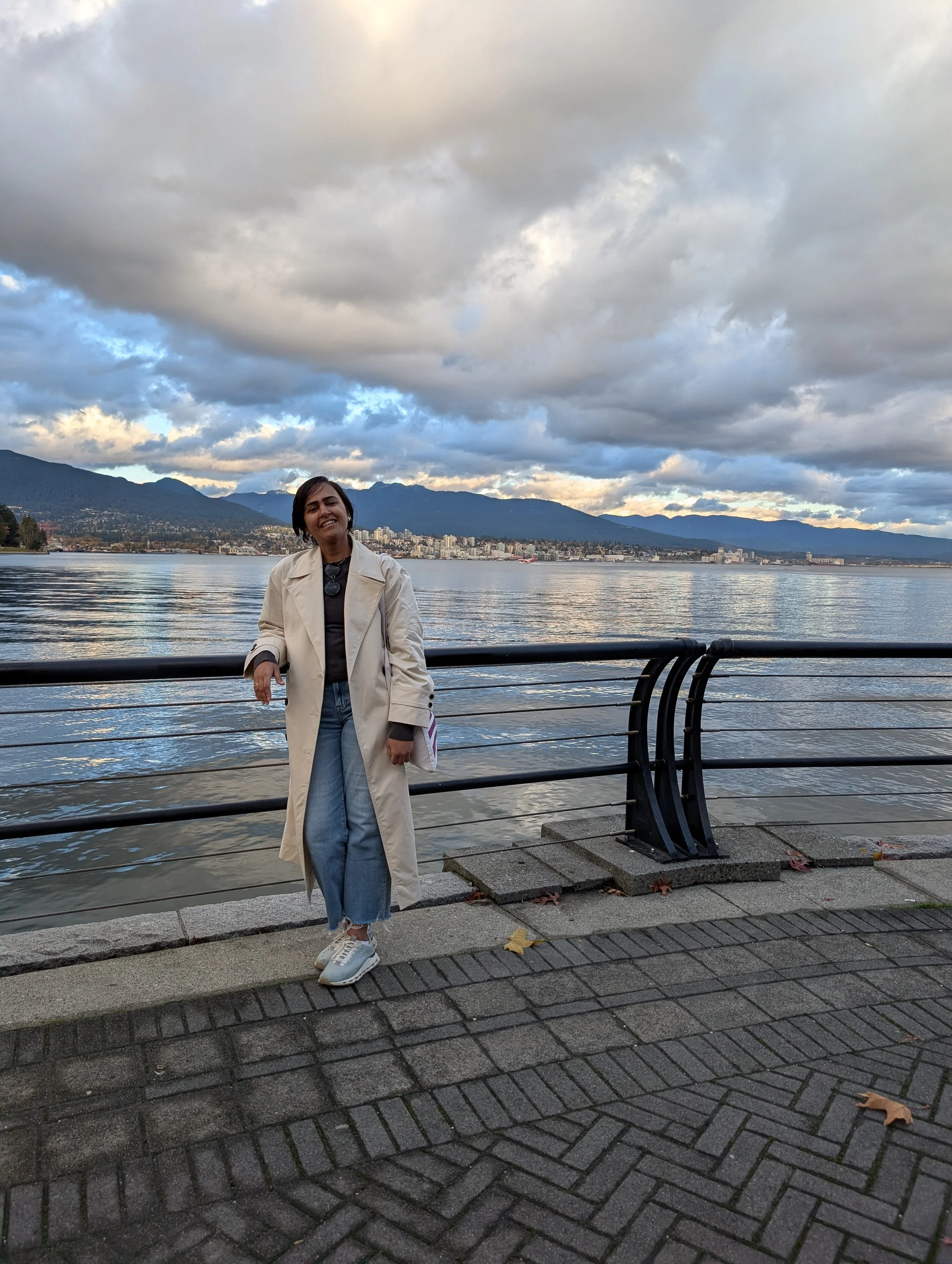
Asmita Chattopadhyay
Content marketer, problems navigator, survivor. Diagnosed in 2021 at 29. DCIS, Stage II, ER+, BRCA1+. Current Line of Treatment: Tamoxifen.
Asmita believes in the power of healing out loud and continues to share about tackling cancer so that more young women are aware of the realities that often go unspoken. Four years posttreatment, this writer at heart is busy navigating life and its myriad quirks, and trying to find her grounds in the deep valleys of hope and healing.
“The Routine of After” is published in Wildfire Journal’s 2026 “Survivorship” issue. Order a print or digital copy of the full issue in our shop. Available in the subscribers’ library as well.