
Wildfire Journal Themes & Submissions

We are currently accepting submissions about personal experiences with breast cancer. Our readers have all been where you are to some extent. This means that when we review submissions, we look for stories that move beyond the arc of diagnosis and treatment toward a single specific moment where living life in the glare of cancer shifts: a hard-won lesson emerges that the reader couldn’t have anticipated, even though they know the territory.
Here are some important elements to keep in mind as you write:
-
Wildfire publishes personal narratives from people diagnosed with breast cancer. (Think memoir versus instructional how-to.)
The word count for essays is 650-1,200.
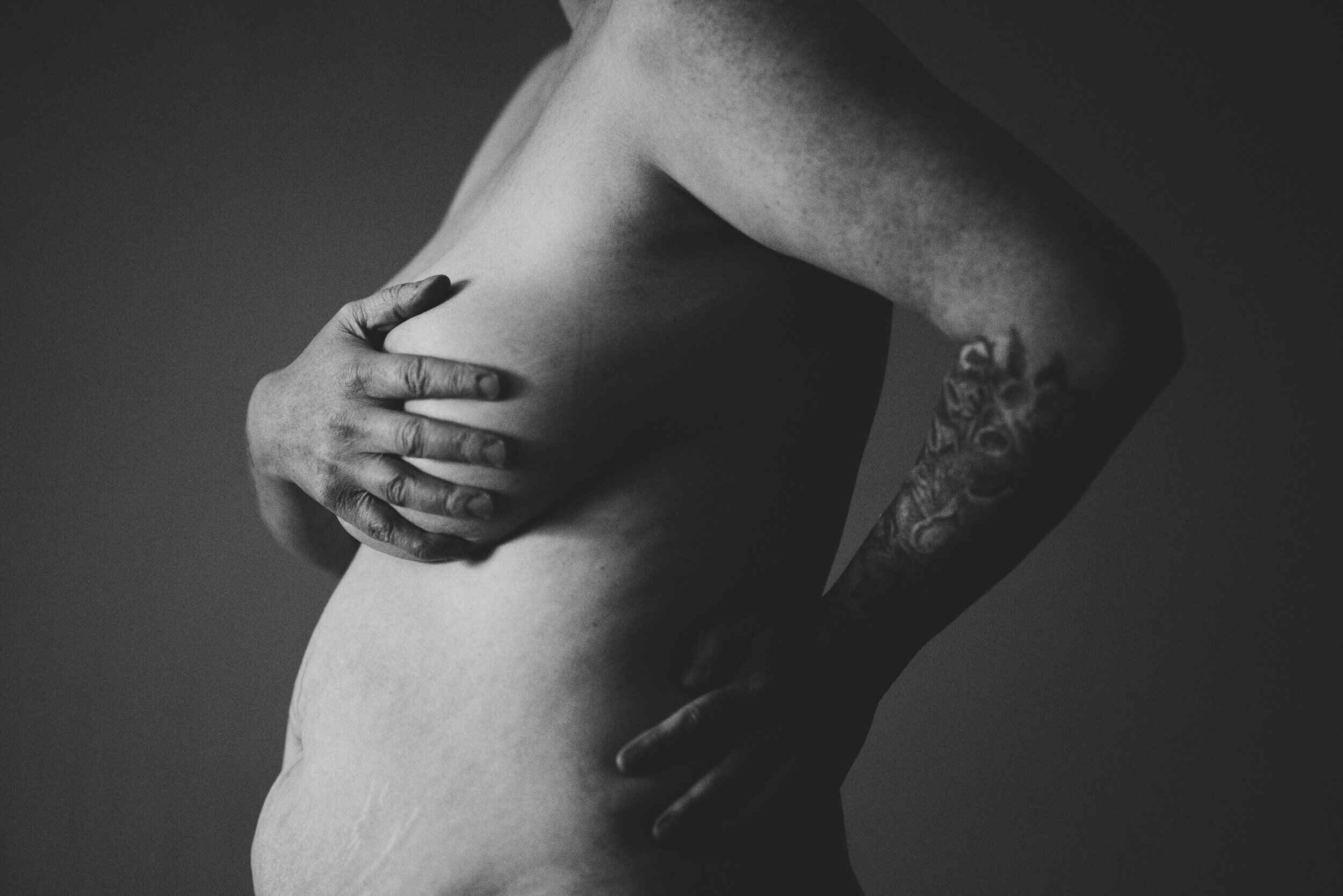
Poems, photography, and artwork are also welcome. (50 lines max for poems.)
Feel free to submit photos with your piece if you like. (Must be 1MB at least to print.)
Although we value originality, we are not opposed to re-publishing stories that have been previously published, particularly if they were previously published on your blog.
You are welcome to resubmit multiple times, even if you have been published in Wildfire before.
We are proud to compensate our writers. If your piece is selected, we’ll share the compensation options with you.
-
Wildfire is an age-specific resource geared to people diagnosed with breast cancer under 50. Therefore, all our writers were diagnosed under 50 (with a few exceptions). If you were diagnosed over 50 but identify with the struggles associated with being diagnosed before menopause (say you have young children or a new career, are dating, etc.) let's discuss your submission idea and see if it fits. Contact us via email at editor@wildfirecommunity.org.
If we accept your article or idea, we’ll send you an email within 1-2 weeks to let you know. Please note that if we agree to read your article based on an idea pitch, we are under no obligation to publish it.
-
Submit via the submission button at the bottom of this page.
-
First, be sure to read Wildfire so you know what kind of stories, poems, art, and photography we publish. You can access featured stories for free here.
In your writing, be yourself. Be casual. Tell your story the way you would tell a friend.
Don't tell your entire breast cancer story. Your story isn't your medical file. Instead, pull out a piece of your breast cancer experience and tell that story. If your life is a book, you have many stories within your breast cancer chapters.
This is important: don't submit your first draft. Make sure you've read and re-read your story (out loud helps!). Trim it down. If you can, have a friend read it too.
Don't sweat the grammar. What's more important is what your story is about. Make sure that's clear.
Don’t forget to title your piece and include your name in your document, too.
And finally, in case you wondered: salty language is just fine.
-
There is a main character (you) who wants something (or wants to avoid something). Show us what's at stake. What do you stand to gain or lose?
Something happens to the main character — an event or situation — that challenges/conflicts with the main character's original desire.
In the end, there is some sort of resolution: the main character gets what she wants, or doesn't get it, but more importantly, the character learns something or changes because of the situation. Hint: huge transformations can be as tiny as a five-second shift in thinking. Reach for the revelation. Your story must have meaning and change (I thought one thing and then something happened and now I realize this.).
Your story should have both a remarkable situation and an emotional story. (Versus, a this-crazy-thing-happened-to-me story you might tell over dinner.)
-
We are looking for stories that slow down to specific moments that illustrate the situation and the emotion. Show us what's at stake and how you progressed toward the transformation that occurred. To really show a scene use your senses. What did it look like? Sound like? Smell like?
-
Everyone who reads Wildfire has also been diagnosed with breast cancer or metastatic breast cancer (MBC). Getting diagnosed isn't your transformation moment. Rather, tell the story that's unique to you and your experience of living beyond that diagnosis day.
-
Whenever possible, show versus tell. (As author Marion Roach Smith puts it: "Show me what you wore to the funeral and I'll know how sad you were.")
Go deep, be vulnerable, be real. In this way you'll write not only an incredible story, but the writing of it will also be a healing experience for you.
-
Read some of our favorite pieces before you submit.
Our Editor in Chief, April’s Suggestions for Making Your Story Stand Out
Upcoming Themes & Production Calendar
Click the pink theme titles for related prompts & inspiration. Scroll down for the submission button.
(Curious about how to moonlight as a community guest editor? Reach out.)
MBC: LOVE & INTIMACY
October / Nov 2026, Vol 11, Issue No. 5
Submission Deadline: CLOSED Publication: October 24, 2026
Guest editor: Wren Morrobel, Creator and Producer of Living Our Breast Lives
BECOMING
Dec 2026 / Jan 2027, Vol 11, Issue No. 6
Submission Deadline: October 25, 2026 Publication: December 19, 2026
Guest editor: Gillian Lichota, Founder of iRise Above Foundation
SOUND
Feb / Mar 2027, Vol 12, Issue No. 1
Submission Deadline: Dec 30, 2026 Publication: February 20, 2027
Guest editor: Kelly Kelbel, Founder of Make Noise
EARLY MENOPAUSE
April / May 2027, Vol 12, Issue No. 2
Submission Deadline: February 25, 2027 Publication: April 17, 2027
11th Annual BODY
June / July 2027, Vol 12, Issue No. 3
Submission Deadline: April 25, 2027 Publication: June 19, 2027
HOPE
August / Sept 2027, Vol 12, Issue No. 4
Submission Deadline: June 25, 2026 Publication: August 21, 2027
You’ve arrived at the moment of truth: you’ve read all our submission requirements, tips, past Wildfire stories, and you’ve crafted your own hard-won lived experience into an essay, poem or piece of artwork. It’s time to share it with us.