
Cancer Doesn’t Get to Come on the First Date
I was sitting on my patio with coffee in my Hello Kitty mug when I decided I might want to have sex again.
Not eventually.
Not theoretically.
I mean the actual kind.
With another human being.
This probably isn’t how inspirational metastatic breast cancer stories are supposed to begin, but after eight years of cancer, I’ve earned the right to skip the inspirational part.
It was morning. I was in the apartment Estelar, and I had made ours after my marriage ended. The patio had slowly become my favorite place—decorated exactly the way I liked because nobody else got a vote anymore. My neighbors were nearby. There would probably be a smoke break later, somebody wandering over, somebody telling me a story.
Nothing remarkable was happening.
And maybe that was what made the thought so startling.
I wasn’t thinking about dying.
I wasn’t thinking about treatment.
I wasn’t thinking about my ex.
I wasn’t even thinking about cancer.
I was thinking:
I miss being wanted.
Then immediately:
Well, fuck.
Because wanting to be wanted is one thing.
Letting somebody actually want you is another.
And letting somebody want you when you have metastatic breast cancer?
Apparently that comes with paperwork.
At least in my head.
I started mentally drafting the disclosure.
Hi. I'm Deb. I’m an interpreter, patient advocate, mother, writer, smartass, cannabis enthusiast, and minor administrative detail—I have incurable cancer.
When exactly does one bring that up?
Before the first kiss?
After?
Do I put it in my dating profile between “bilingual” and “likes coffee”?
There should be a handbook:
“Dating With Metastatic Breast Cancer: How to Tell Someone You Might Die Without Completely Killing the Vibe.”
I’d buy it.
For years, intimacy had been tangled up with caregiving.
My body wasn’t just my body anymore.
It was a body that had been examined, scanned, infused, injected, cut open, and radiated.
People discussed it in conference rooms.
They measured things inside it.
They photographed it.
They wrote reports about it.
They scheduled it every three weeks.
My body had become very public while simultaneously feeling less and less like something I knew privately.
And then there were the medications.
Herceptin.
Verzenio.
Lupron.
Letrozole.
Cancer treatment has many talents. Preserving spontaneous sexuality is not necessarily one of them.
Hormones change. Desire changes.
Sensation changes.
Things that used to happen naturally can suddenly require planning, patience, lubricant, and possibly congressional approval.
Then my marriage ended.
I had spent years being loved inside illness.
Joel had known the cancer version of me intimately: treatments, scans, exhaustion, another breast cancer, surgery, chemo, radiation.
There is a particular nakedness in being cared for when you’re sick that has absolutely nothing to do with taking your clothes off.
Someone sees the version of you who can’t perform.
Can’t be sexy.
Can’t be funny.
Can’t reassure everybody that you’re fine.
Then that person is gone, and suddenly you have to figure out who you are when nobody is watching you survive.
That was the part I hadn’t expected.
I knew how to be a cancer patient.
I knew how to be somebody’s wife.
I knew how to be Estelar’s mom.
I knew how to advocate, explain, translate, fight, show up, fill out forms, and walk into medical appointments
carrying questions.
But sitting on my patio that morning, I realized I didn’t know how to be a woman who simply wanted somebody.
No noble purpose.
No cancer lesson.
Just desire.
And desire felt dangerous.
Because desire eventually requires being seen.
I downloaded a dating app.
Then stared at my profile as if it were a legal document that might later be used against me.
Photos.
Interests.
A little paragraph designed to convince strangers that I’m charming but not unhinged.
Or charming because I’m slightly unhinged.
There was no checkbox for:
Metastatic but currently doing pretty fucking well.
I left cancer out.
And immediately felt guilty.
That surprised me.
I wasn’t lying.
Everything in my profile was true.
But after years of MBC taking up so much space in my life, leaving it out felt almost dishonest.
Like I was hiding something.
Then I caught myself.
Why did cancer believe it was entitled to introduce me?
A stranger didn’t know my medical history yet.
They also didn’t know about the court battles I’d survived.
They didn’t know about the people I’d lost.
They didn’t know the complicated parts of motherhood.
They didn’t know what scares me at 3 in the morning.
They didn’t know how many times I’ve had to rebuild a life I thought was permanent.
Those things weren’t lies because I hadn’t disclosed them.
They were mine.
Cancer was mine too.
I could decide when someone earned that information.
That was new.
For years, cancer had controlled the timing of everything.
Appointments.
Infusions.
Scans.
Surgeries.
Radiation.
Three-week cycles.
The next CT.
The next blood draw.
The next moment somebody might tell me my life had changed again.
Cancer was always telling me where to be and when.
And suddenly here was this tiny thing it couldn’t schedule.
I got to decide when someone knew.
I put the phone down.
My coffee had gone cold.
Later, Estelar and I were on the couch.
There were probably dishes in the sink.
There are often dishes in the sink.
Cancer has given me many profound insights, and one of them is that dishes are remarkably patient.
She was talking to me about something that mattered enormously in the world of middle school.
I was trying to follow the plot.
And I looked around our apartment.
Our stuff.
Our routines.
Our life.
My life.
I had spent months thinking that intimacy was something I had lost when my marriage ended.
The person who had known my sick body was gone.
Who would ever know me that way again?
But sitting there beside my daughter, I realized how much intimacy already existed around me.
Coffee with neighbors.
Smoke breaks that turn into hour-long conversations.
Friends who remember scan days.
My daughter sprawled beside me telling me a story I barely understand but desperately want to hear.
My patio.
My ridiculous mug.
My freedom.
The quiet pleasure of living at my own pace.
Deb and Estelar.
I hadn’t lost intimacy.
It had changed shape.
And maybe I had too.
I used to think intimacy meant being known completely.
Now I’m not sure that’s true.
I think intimacy might be allowing yourself to be known slowly.
By choice.
Piece by piece.
Not because cancer forced your clothes off.
Not because illness made you vulnerable.
Not because somebody became responsible for keeping you alive.
But because you decided:
You can come closer.
That feels different.
Sexier, actually.
I still don’t know exactly when I’ll tell the next person I date that I have metastatic breast cancer.
Maybe right away.
Maybe before we kiss.
Maybe after.
Maybe over coffee.
Maybe I’ll make a joke because that’s what I do when something scares me.
I do know this:
I don’t owe cancer the first sentence anymore.
For eight years, MBC has entered rooms before me.
Stage IV.
Metastatic.
Incurable.
Those words are true.
But so are these:
Woman.
Mother.
Friend.
Writer.
Advocate.
Smartass.
Flirt.
Still occasionally horny, thank you very much.
Still curious.
Still soft underneath all this armor.
Still capable of wanting.
Still capable of being wanted.
The shift happened so quietly I almost missed it.
One morning, drinking coffee from a Hello Kitty mug, I thought I was wondering whether anyone would still want a woman with metastatic breast cancer.
But that wasn’t really the question.
The question was whether I was willing to want something again when I couldn’t know how long I’d get to keep it.
For years, cancer had trained me to anticipate loss.
A treatment can stop working.
A scan can change.
A person can leave.
A body can betray you.
Nothing is guaranteed.
So maybe the safest thing would be not to reach too hard for anything.
But sitting there with cold coffee, I realized something almost embarrassingly simple.
I want things anyway.
I want flirting.
I want terrible first-date stories.
I want kisses.
I want sex.
I want someone to make me laugh when I’m trying very hard to stay annoyed.
I want long conversations.
I want to be touched without feeling like my body is a medical event.
I want someone to discover me instead of being handed my entire history at the door.
Maybe they’ll stay.
Maybe they won’t.
Maybe I’ll fall in love again.
Maybe I won’t.
For once, I don’t need to know the ending.
That’s new for a woman who has spent eight years waiting for scan results.
I just know cancer doesn’t get to come on the first date, unless I invite it.
That bitch has taken up enough of my time. 🌿
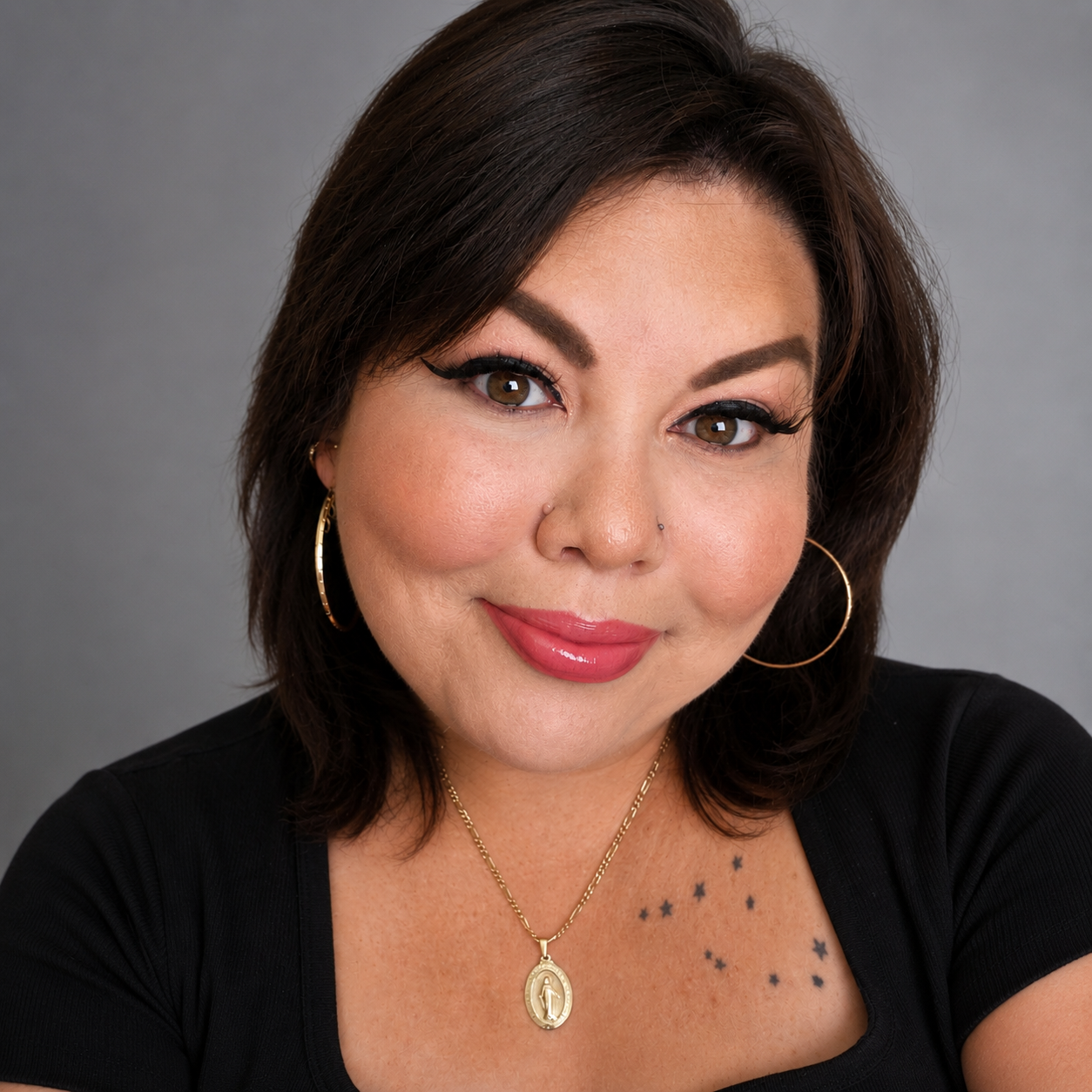
Deborah “Deb” Blake-Ontiveros
Community health worker. Diagnosed at 37. IDC-L (ductal carcinoma with lobular features), Stage IV, Triple Positive.
Deb is a bilingual Spanish/English interpreter, patient advocate, and writer living in Cedar City, Utah, with her daughter, Estelar. Deb writes and advocates candidly about cancer, motherhood, mental health, intimacy, and living beyond the expected narrative with plenty of sass, inappropriate humor, and coffee in a Hello Kitty mug.
@deb4peace247
“Cancer Doesn’t Get to Come on the First Date” is published in Wildfire Journal’s 2026 “MBC - Love & Intimacy” issue. Order a print copy in our shop. Available as a digital download and in the subscribers’ library starting October 24, 2026.