
The Silent Type
I spent the week between my third and fourth rounds of chemo in complete silence — with a shaved head, a queasy stomach, and 30 strangers who weren’t allowed to speak to me. It wasn’t my first silent meditation retreat, but it was the first one I’d attended while actively battling cancer. I’d been on the fence about going, as these retreats had proven personally difficult in the past, and I had more than enough to deal with. But when my chemo schedule aligned with a retreat titled “Practicing Amidst Life’s Challenges,” it felt a little too on-the-nose to ignore.
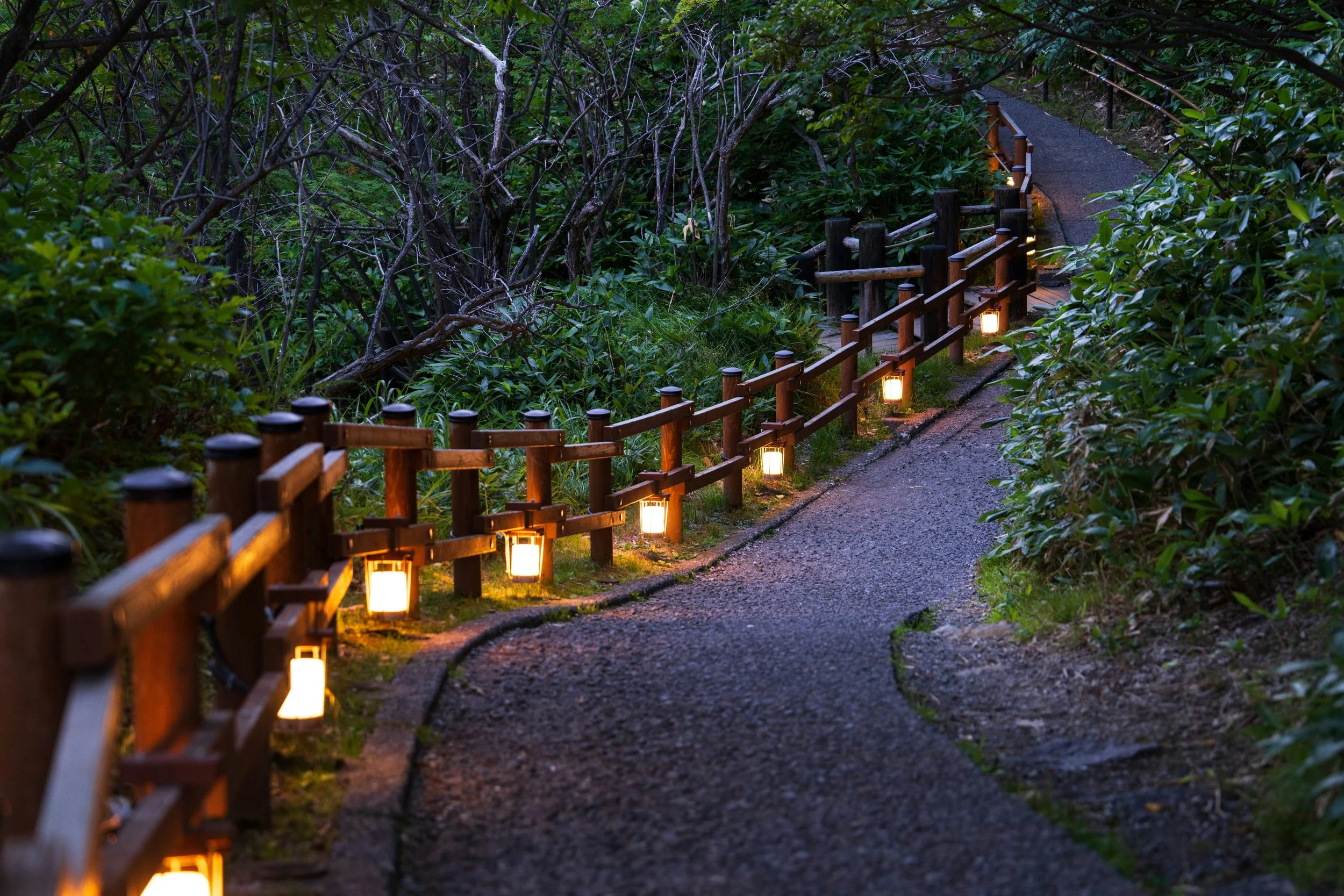
The retreat center is set in an old-growth forest in Western Washington. The seven or so buildings, established at various stages of the center’s 40+ year history, are connected by mossy trails lit with Japanese lanterns. Tales of cougar and bear sightings abound, and in the distance, you can hear the faint echoes of gunshots from locals hunting in the woods. But on the property, it's a symphony of frogs, woodpeckers, owls, and coyotes. My room is small. Just enough for a twin bed, a nightstand, and a small dresser. It’s perfect. Both fully sensory and acute deprivation at once.
The first night is orientation, followed by dinner — a simple bowl of Italian veggie soup — where we are invited to chat with other retreatants before the first meditation begins. I was making conversation, but I could barely finish the soup.
My nausea was at its peak, my appetite nonexistent. By the time we headed to the meditation hall for the official kick-off, I was more than ready for us all to shut up.
Usually, at this point, I’d be experiencing sharp anxiety or crushing doubt — a real “oh God, why did I think this was a good idea,” moment. But strangely, this time, I felt at ease. I was so grateful for a week without a doctor’s visit or juggling my full-time job with my symptoms that it suppressed my typical apprehension. Instead, I felt more ready than I’d ever been for a week of silence. No forced smiles. No having to explain myself. No "How are you feeling?" or "You’ve got this!" Just me, my breath, and the time to unpack everything I was carrying. My schedule for the next five days was set: sit, walk, sit, repeat.
The next morning, I managed a whole bowl of oatmeal, followed immediately by an urgent need for the restroom. I ran to a private bathroom — small, but with its own toilet and sink. I sat there, searching for the toilet paper, when my nose started to gush blood. I am prone to bloody noses, but they’d grown more frequent during treatment. As blood ran down my face, the toilet paper search grew desperate.
This bathroom that gave me my privacy now felt claustrophobic. And right on cue, I get the mother of all hot flashes. I pulled the beanie off my head, finally found the toilet paper, and shoved wads of it up my nose. As I was concurrently shitting, bleeding, and hot flashing, I heard the bell signaling the five-minute warning for morning meditation. Some of the anxiety missing from last night began to creep in.
Then, I looked in the mirror. What I saw was the “new” me: a bald, patchy head, twists of toilet paper jammed in both nostrils, dried blood on my chin, and all over my white T-shirt.
Could I cry? Easily. The tears were right there. But instead, I started laughing. I couldn’t help it — it was such a comically low point in that smelly, bloody, steaming hot bathroom.
And the truly fantastic part was that if I waltzed into morning meditation looking deranged, no one could say a word about it: it’s a silent retreat, suckers!
I took a deep breath, washed my face, put the beanie back on my head, and buttoned up my flannel shirt to hide the blood. I scurried into the meditation hall with seconds to spare.
I removed my shoes and settled onto the cushion. The teacher, a former monk turned Wisconsin farmer, sat in the center of the hall, with the retreatants surrounding him. He reminded me of the farmer in American Gothic. I’d intended to go to his retreat last spring, but it was cancelled because of his sudden diagnosis of lymphoma. At that time, I didn’t know I had breast cancer, and as I sat on my cushion that first night, I thought about how my feelings had morphed from distant sympathy to visceral empathy in a year's time.
At the end of his dharma talk, he announced the small group checkins. While the retreat is silent, they do offer space to connect during the week to support your practice. It’s helpful because oftentimes you’ll find that what you may be struggling with in meditation — anxiety, doubt, discomfort — others are too. He created three groups, and we could self-select. There was one for people with serious illness (obviously, I was signing up for that), another for people struggling with larger-than-life challenges (like climate change, war, political division), and a third group for personal challenges (grief, divorce, unemployment, etc.).
The following day, the serious illness group — five plus the teacher — met for the first time. Arranged in a circle of folding chairs, we each took turns introducing ourselves and sharing our experiences. Everyone except me was well over 60. They’d all gone through some sort of cancer and were now in maintenance mode. When I shared that I was between rounds of chemo, they were so visibly aghast that I had a doubt attack. Was this a bad idea? But no, I felt like I was exactly where I needed to be.
Not only was the conversation sweet and supportive, but it was also the first time I could lament about dexamethasone, and a room of people got it.
The teacher told a disgusting story about seeing his colon prolapse. He and I both chuckled, but everyone else was horrified. I decided not to share my bathroom experience. Even cancer kinship will only take you so far.
The bell rang for dinner, which signaled that it was time to return to our noble silence. But I carried the knowledge that there were other people in this space who’d gone through a serious illness with me for the rest of the week. It grounded me when thoughts and feelings crept in and got me through some tough moments.
I’d like to say the week of silence brought a new, profound view on life, a powerful insight into what I was going through, or a resolution on who I wanted to be. But honestly, it was simply a time to do nothing. To be in the present moment. To touch the mossy trees, to watch a trillium flower bloom and decompose, to listen to the frog’s night song. To recognize impermanence, including in this body that had been ravaged for a year, so that I could hopefully live a few more. Shockingly, my appetite returned. The most it had since starting chemo. And that was more than enough. It was everything.🌿
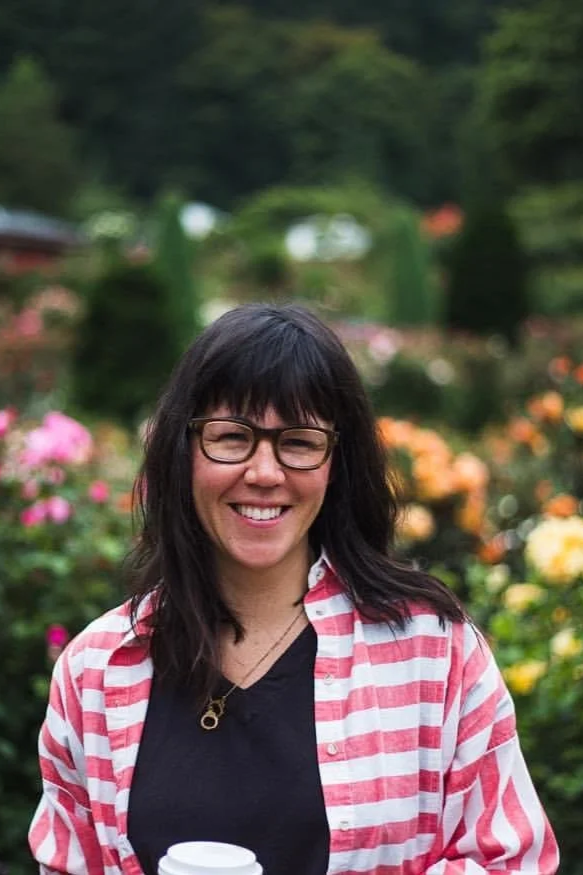
Jill Aki Hrycyk
Policy Planner. Diagnosed at 41. IDC, Stage II, ER+, PR+. Current Lines of Treatment: Aromatase inhibitor (Arimidex) and CDK4 inhibitor (Kisquali).
Jill is a policy planner working to improve the garbage and recycling system in Portland, Oregon. She also enjoys painting, bicycling, and taking group workout classes. Her Japanese mother—who is also undergoing breast cancer treatment—taught Jill the valuable philosophy of wabi sabi, or as her mother puts it, “simple and imperfect,” much like Jill’s new boobs.
“The Silent Type” is published in Wildfire Journal’s 2025 “Metamorphosis” issue. Order a print or digital copy of the full issue in our shop. Available in the subscribers’ library as well.