
At The Rail
I have always taken issue with the word thriver being used to describe those of us with metastatic breast cancer. I prefer hostage or lifer. Thriver is too loaded, too wellness-branded. It sounds like green juice, gratitude journals, and photos of women in headscarves smiling into the sun. It sounds like something people want for cancer patients because it makes everyone else feel better. I have MBC, and I’m not interested in pretending this is fine. But if thriving means refusing to disappear from my own life, maybe I do understand it.
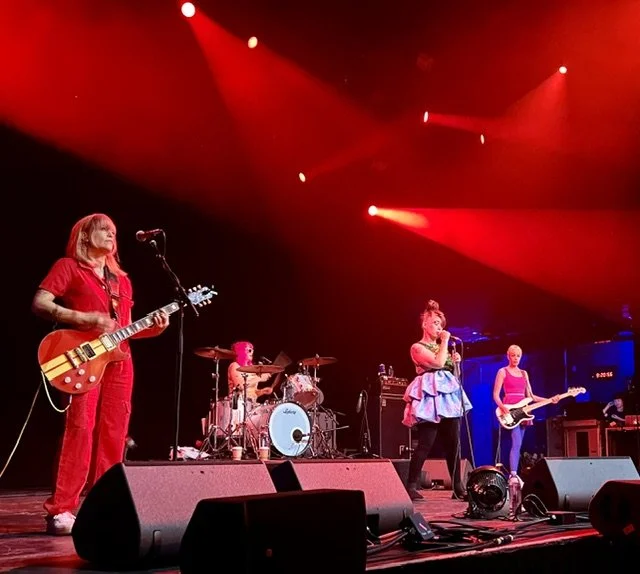
For me, thriving sounds like the first bass note thumping in my chest at a general admission show. It feels like my arms are pressed against the barricade, my feet are aching, and my body is pushed forward by hundreds of other bodies, all of us waiting for the lights to go down. It looks like getting to the show early, refusing to give up my spot, and standing as close as possible to the experience I came there for. Thriving, for me, is being at the rail.
I have loved music for as long as I can remember. When I was six, I saw the video for “Sweet Dreams (Are Made of This)” and was completely captivated by Annie Lennox. I did not know anything then about gender presentation or subversion. I just knew she looked like nobody else, and it fascinated me. I was also obsessed with Cyndi Lauper. I think I was drawn early to women musicians who seemed to exist entirely on their own terms.
At 14, I got my first CD player. My first CDs were Tori Amos, Morrissey, and Nirvana, which says a lot about who I already was: a straight-A student, bookish, awkward, nerdy, weird, and more stylish than I recognized at the time. I spent many weekends at the indie movie theater, Borders, Tower Records, and concerts.
My first real concert experience was seeing The Cranberries when I was 16, before they became famous, at The Huntridge, a small old movie theater turned concert venue. After the show, the band walked around in the crowd. My friend and I met them and hugged Dolores O’Riordan. She was tiny and sweet, with this enormous voice that seemed impossible coming from such a small person. I did not know then that I would carry that moment for the rest of my life.
For a while, I mostly stopped going. I became an attorney. I had a baby. I was tired, busy, and responsible. There were bills, deadlines, bedtime routines, school forms, and years when my body never seemed to get enough sleep. Concerts became something I could postpone. There would be another tour, another year, another chance. Then I was diagnosed with MBC.
At first, everything in my life revolved around cancer: scans, appointments, medications, side effects, pain, fear—just trying to get through each day. My cancer had spread to my bones, and shortly after diagnosis, my L2 vertebra fractured. I was suddenly living in a body that felt fragile and foreign. MBC changes your relationship with time, though not in the inspirational way people seem to want. I do not live every day as if it were my last. Most days, I do laundry, school pickup and drop-off, run errands, cook dinner, argue with insurance, or scroll mindlessly on my phone. What MBC does is make it harder to pretend that later is guaranteed.
I think about some of the shows I missed and the easy confidence with which I assumed there would be a next time. After my diagnosis, the next time became a much more dangerous phrase. I started to understand that live music was not a frivolous extra in my life, but one of the ways I recognized myself. I did not suddenly become someone who loved concerts because I had cancer. I had always been that person, and cancer made me realize I had forgotten her.
So I started going again, in the way I want to go: general admission, getting there early, standing for hours. It means being up against the rail, close enough to see facial expressions, tattoos, instruments, sweat, setlists, and all the small human details missed farther back. It means feeling the bass and drums in my chest, not just hearing them.
Since diagnosis, I have kept collecting those moments. A few weeks after a surgery, still wearing compression garments, my body bruised and swollen and sore, looking like it had been in a car crash, I flew to Chicago to see Bikini Kill. I bought a seat in addition to my GA ticket just in case my body could not handle standing. But I still showed up early and spent the entire show leaning against the rail.
This is not a bucket list. A bucket list is too cliché, too final, too organized around checking things off before you die. This is about returning to a part of myself that I lost.
My body has changed significantly since diagnosis. It is softer, rounder, more tired. It carries the effects of cancer and treatment every day. But this is the body that stands at the rail, sings every word to songs I first heard when I was 14, still feels bass in the chest, and shows up.
Cancer has not made me fearless. I am afraid all the time in ways both large and small. I am afraid of progression, of pain, of leaving my wife and son, of running out of time. But fear is not the only thing I feel. I also feel urgency, desire, joy, defiance, and gratitude. Sometimes I feel all of this at once, standing in a crowd, waiting for the lights to go down. Maybe that is thriving. Not becoming a better person because of cancer. Not transforming suffering into a tidy lesson. Maybe thriving is remembering what makes you feel most like yourself and refusing to keep postponing it.
There is a moment before a GA show starts when the room changes. The crowd shifts forward, the stage lights come on, someone screams, the first notes hit, and for a while, I am not just a cancer patient. I am not a scan result, a medication list, a prognosis, or a person with an incurable disease. I am the six-year-old captivated by Annie Lennox. I am the teenager stumbling upon new music at Tower Records. I am the 16-year-old hugging Dolores O’Riordan after a Cranberries show. I am the woman who still knows every word of Little Earthquakes. I am the woman at the rail.
I do not go to shows because I am dying. I go because I am still alive. 🌿
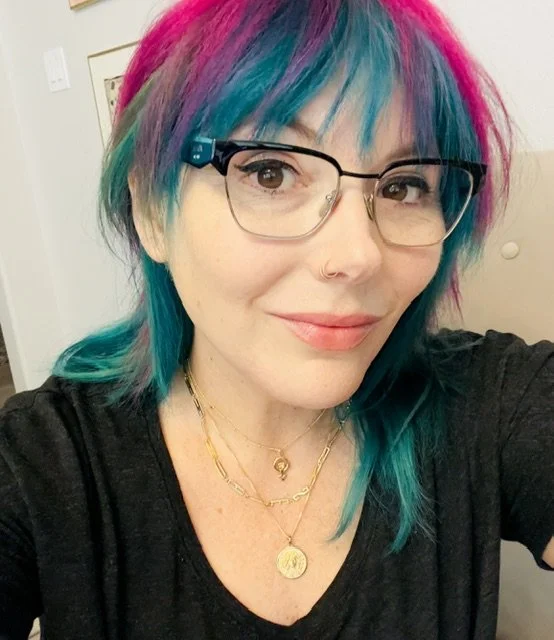
Lauren Izzo
Former attorney, professional cancer patient, metastatic breast cancer advocate, writer, mother, and wife. Diagnosed in 2022 at 44. IDC, Stage IV, ER+, PR+, ESR1 mutation. Current Lines of treatment: Orserdu and Verzenio.
Lauren lives in the Houston, Texas area with her wife, son, and dogs. Before becoming a stay-at-home parent and professional cancer patient, she worked as an attorney in public defense, civil rights, and consumer bankruptcy. She writes personal essays and poetry about metastatic breast cancer, identity, body image, uncertainty, grief, and the refusal to turn illness into a tidy lesson.
“At the Rail” is published in Wildfire Journal’s 2026 “Thriving” issue. Get the digital issue in our shop. Available in the subscribers’ library as well.